


The Hiring Horizon
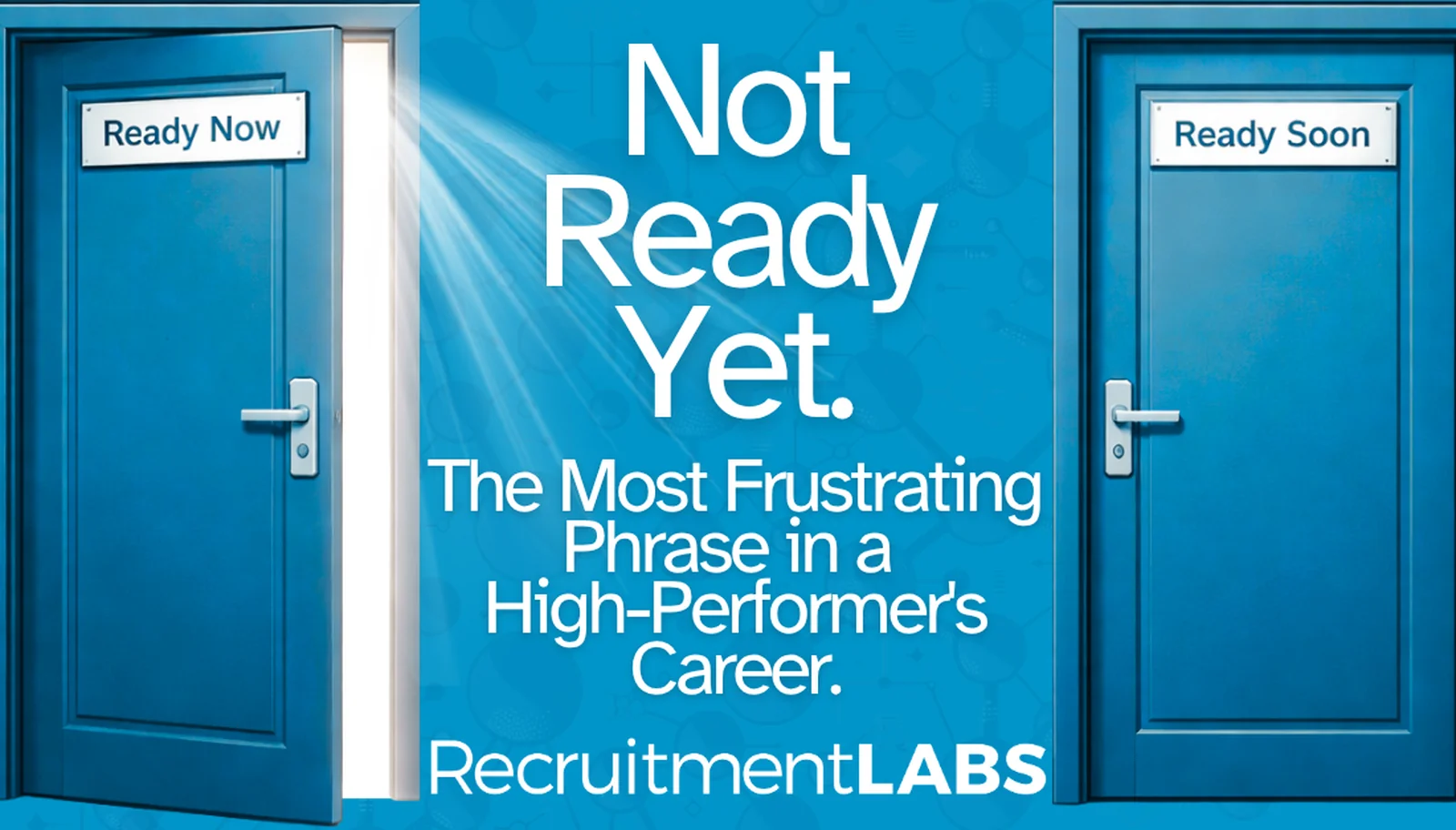
"Not Ready Yet" Is the Most Frustrating Phrase in a High-Performer's Career
April 14, 2026 · 4 min read
You're good at your job. Everyone knows it. Your reviews are strong, your output is solid, and people come to you when things get complicated.
But the step-up keeps not happening.
And when you ask why, you get some version of the same answer: "You're doing brilliantly. Just not quite there yet."
Here's the thing about that feedback. It's usually not about your capability. It's about your evidence.
There's a distinction I see in almost every hiring process, and it shows up faster than most candidates realise.
Some people walk in as "Ready Soon". They're clearly talented. Strong foundations, good track record, obvious potential. But the panel walks away feeling like they'd be taking a risk. Like this person has never quite had to hold the bag on something that really mattered.
Others walk in as "Ready Now". Same experience on paper, sometimes less. But the way they talk about their work is completely different. They don't describe what they did. They describe what they owned. And that one shift changes everything.
The good news: this is a positioning problem, not a capability problem. And positioning is fixable.
The Fastest Way to Read the Room on This
Ask yourself how you would answer this question: "Tell me about a significant achievement in your current role."
If your answer is full of “we”, heavy on process, and vague on what actually changed because of you, you will usually come across as Ready Soon.
Ready Now sounds more like: “I owned a 4% margin improvement target. I made the call, I carried the risk, and when the numbers stalled in month two, I changed the approach.”
Same experience. Different framing. Very different impression.
Five Things That Actually Signal Readiness
You own outcomes, not tasks. Talk about the buck stopping with you. Not "I supported the project" but "I was accountable for the result, and here's what that looked like when it got hard."
You've influenced people who don't report to you. Senior roles are mostly about lateral influence. The evidence employers want is a story where you changed the direction of a commercial decision without having the authority to force it.
You've made calls with bad information. This one is underrated. Step-up roles come with imperfect data and real stakes. If you can show you've provided a clear recommendation when the business was in a fog and people were looking to you for certainty, that's senior-level behaviour.
You've shifted a team, not just led one. There's a difference between being a good manager and being a leader who has actually changed how a group performs. A difficult exit you managed well, a function you restructured, a team you inherited and rebuilt: these are the stories that land.
You've framed trade-offs, not just reported numbers. Senior leaders want to see that you think in choices, not data. "Here's what Option A costs us versus Option B, and here's my recommendation" is worth ten perfect management packs.
The Single Best Interview Technique for a Step-Up Role
Stop talking like a candidate. Start talking like you already have the job.
There's a shift that high-performers can make mid-conversation that changes the entire energy in the room. Instead of "in my current role I do X," try "coming into this role, my first priority would be Y, because of what I can see about Z in the business."
That's not arrogance. That's what a peer sounds like. And at the senior level, they're not hiring a candidate, they're hiring a partner.
If you're going for an external step-up, bring a rough 30/60/90 view. Not a polished deck, just a clear sense of what you'd stabilise, what you'd question, and what you'd want to build. It shows you've thought about the mandate, not just the title.
And if there's a gap in your experience, bridge it directly rather than hoping no one notices. "I haven't led a full IPO, but I did lead debt restructuring and investor reporting for a $200m entity, and the rigour required there was immense." That's confidence. Hiding the gap is not.
If You're Trying to Move Internally
The promotion decision often gets made in conversations you're not in. Which means you need someone in the room who can articulate your next-level capability when you aren't there.
Find a sponsor. Not a mentor who gives you feedback, a sponsor who advocates for you out loud.
Beyond that: claim a project that sits at board level, even if it stretches you. Chair the part of the leadership meeting that deals with performance, not just the part that's comfortable. Build a short evidence portfolio: five outcomes, with the context, your specific role, and the commercial result for each.
Ready Now is not a personality type. It's a file. Build the file.
If you're stuck in the "Ready Soon" holding pattern and want help auditing what's actually there, let's have a conversation. The step-up role is usually closer than it looks.
About Recruitment Labs
Recruitment Labs is a boutique search firm specialising exclusively in accounting & finance recruitment across Australia and New Zealand. For twenty years we've helped businesses build high-performing finance teams, and helped finance professionals find roles that fit their skills, goals and values.
Keep Reading
More from The Hiring Horizon.
Your LinkedIn Is Your Second CV. A Finance Leader’s Profile Rebuild (Headline, About, Proof)
Most senior finance LinkedIn profiles run on default settings. A practical rebuild for Sydney and Australian finance leaders: headline, About section and proof.
Read Article
You’re Not Overqualified. You’re Mispositioned.
“Overqualified” is rarely honest feedback. Why senior finance candidates get filtered out for it, and the reframe that actually gets you the role.
Read Article
The EOFY Career Decision Stay, Go, or Stop Kidding Yourself
Should you stay, go, or stop deferring the decision? A practical framework for finance professionals weighing up their next move at EOFY.
Read Article