


The Hiring Horizon
Hiring in 2026: What’s moving, What’s holding you back, & how to win talent early
January 14, 2026 · 5 min read
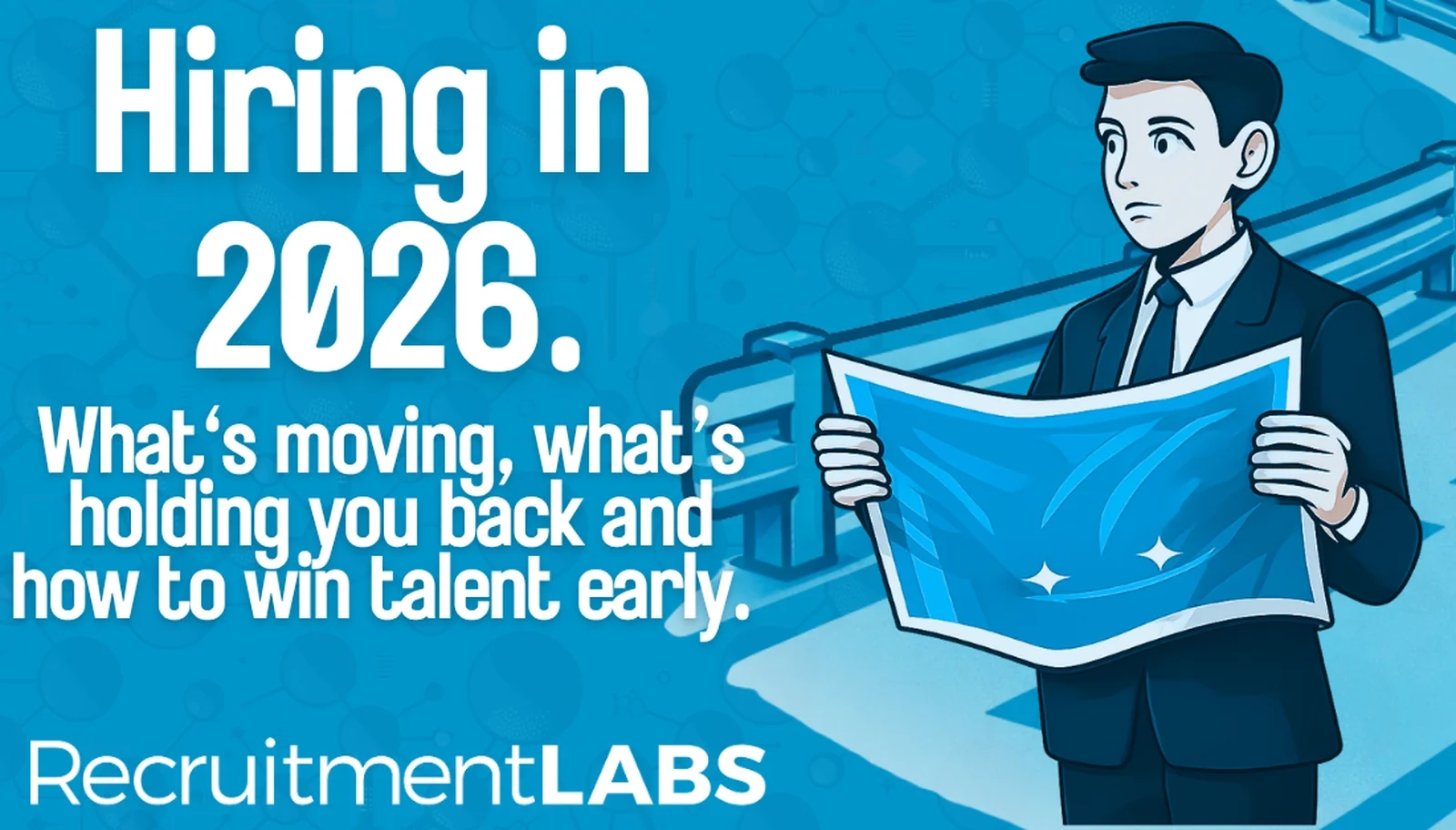
For many businesses, 2025 felt like hiring with one hand tied behind your back. Good people were out there, but so was a massive amount of NOISE. Don’t expect things to magically change in 2026.
The best talent aren’t sitting on SEEK, refreshing their browsers. They’re busy. They’re working. And they are filtering through more opportunities faster than ever.
To win in 2026, you need to be clear on three things: What’s moving, what’s still painfully holding you back, and how to engage early.
What’s happening in 2026 (and why it matters)
Clarity is your Currency: With so much AI noise (automated outreach, Bot Calling, AI Screening & Interviewing), candidates are getting bombarded. If your first conversation is vague, they assume your business is too. Your “screening” is really your first advertisement as an employer. If you can’t explain the remit, outcomes and process in plain English, quickly, candidates aren’t buying.
The Death of the Job Ad: Most people won’t read your ad. A few will skim it at best. If you rely on platforms built to encourage a "one-click-apply" process, you’ll be flooded with irrelevant AI-led applications. Your talent function must become proactive and strategic, building & managing talent pools before needs arise.
Hybrid Maturity: WFH is still very real, but the conversation has matured. Candidates want logic over policy. They aren't asking to "WFH forever," but they want to know why they are in the office. They’ll flex for the right role if there’s a sensible rhythm: strategy and collaboration in person; "heads-down" work at home.
Value-Shopping vs. Salary-Shopping: Top leaders aren’t leaving good seats for money alone; they are moving for a broader mandate. Don’t ignore or overlook perceived "sideways moves". If the scope, influence and ownership are bigger, the talent will listen. Don’t make the decision for them.
Decisive Speed vs. Rushed Speed: Decisive speed is a locked process, and agreed 10 days from first interview to offer, and 48-hour max feedback loops. Rushed speed is panic and inconsistency. Adding unnecessary steps to create the illusion of momentum. One wins talent; the other scares it away.
What’s Holding You Back (and still losing you talent)
Released vs. Briefed: roles are still being released, not briefed. A title and a job description are not a brief. A salary band is not a strategy.
Committee Creep: Five stakeholders with no clear owner. If everyone has a veto but no one has the "buy" decision, you will lose your top choice to a leaner competitor.
The “Perfect Unicorn” Fantasy: Seeking a transformation agent who is also "elbows-deep" in BAU and technically elite, usually for a mid-market salary. It’s not that market.
The Black Hole: Candidates don’t mind a ‘no’ but they do mind radio silence and being left in the dark. Slow feedback is perceived as a lack of respect or internal alignment. Updates & responses have to come fast.
How to Win Talent Early (The Recruitment Labs Playbook)
1. The "Cross-Examination" Briefing: Before meeting a single candidate, pull every stakeholder into the same room and get alignment on at least:
Why does this role exist now? Not last year, not the last time we placed it.
What are the outcomes on which we will judge this hire, and how do we measure them?
What does ‘good’ look like at 3,6 & 12 months? What do we expect to see?
What is non-negotiable vs nice to have?
What will break if we get this wrong?
2. The 10-Day Decision Window. Remove dead time, not standards. Aim for first interview to offer in 10 business days (calibrate accordingly for the level). This requires organising and blocking out diaries upfront so you’re not herding cats and delaying processes later.
3. EVP: Talk Like a Human. Stop using 40-slide decks to explain the business. Explain where the role creates leverage and what the candidate will actually own. High-performers are attracted to impact, not corporate platitudes.
4. Interview for Evidence, Not Confidence. Use a weighted scorecard (e.g., Commercial Partnering, Change Leadership, Technical Integrity) and ask for specific numerical proof of outcomes. This allows you to benchmark a shortlist based on facts, not "gut feel."
5. Closing is a Skill. Candidates aren’t joining a role, they’re joining a team, a culture, a leadership environment. Share the plan, the runway, and the support system long before the offer letter arrives.
A Simple Checklist for January Hiring
Confirm the Brief: Define your outcomes, the skills needed, any non-negotiables and trade-offs.
Lockdown Calendars: Block out 2-3 interview rounds within 10 days. Keep everyone available and committed to those times.
Build the Scorecard: agree on the weighting and who owns the final "Yes" before you meet the first candidate.
Define the Close: Who is responsible for selling the vision to the candidate? What gets shared and how fast the offer goes out.
Treat candidates like future colleagues, because the best ones will be soon.
If your current hiring process feels stuck, messy, or slow, let’s talk about how to fix the rhythm and find the difference makers you need. Ready to calibrate your process? Let's connect.
About Recruitment Labs
Recruitment Labs is a boutique search firm specialising exclusively in accounting & finance recruitment across Australia and New Zealand. For twenty years we've helped businesses build high-performing finance teams, and helped finance professionals find roles that fit their skills, goals and values.
Keep Reading
More from The Hiring Horizon.
AI in Recruitment. If Your CFO Search Starts With a Chatbot, Your CFO Search Is Over.
If your CFO search starts with a chatbot, your CFO search is already over. Where AI helps in recruitment, and where it can't replace judgement.
Read Article
Finance Hiring Market Update, September 2026: Busy, But Maybe Not As Busy As It Should Be
August was a good month, but a notch below where this quarter should sit. Our September 2026 read on the Sydney and Australian accounting & finance hiring market.
Read Article
Brief Me Like I’m the Candidate: How to Really Assess a Recruiter
The best test of a recruitment partner isn’t their process or their fee. It’s whether they can brief you on the role as if you were the candidate.
Read Article